
Four centuries in a cup
How a small temple in a Ningbo village came to share its herbal teas with the world.
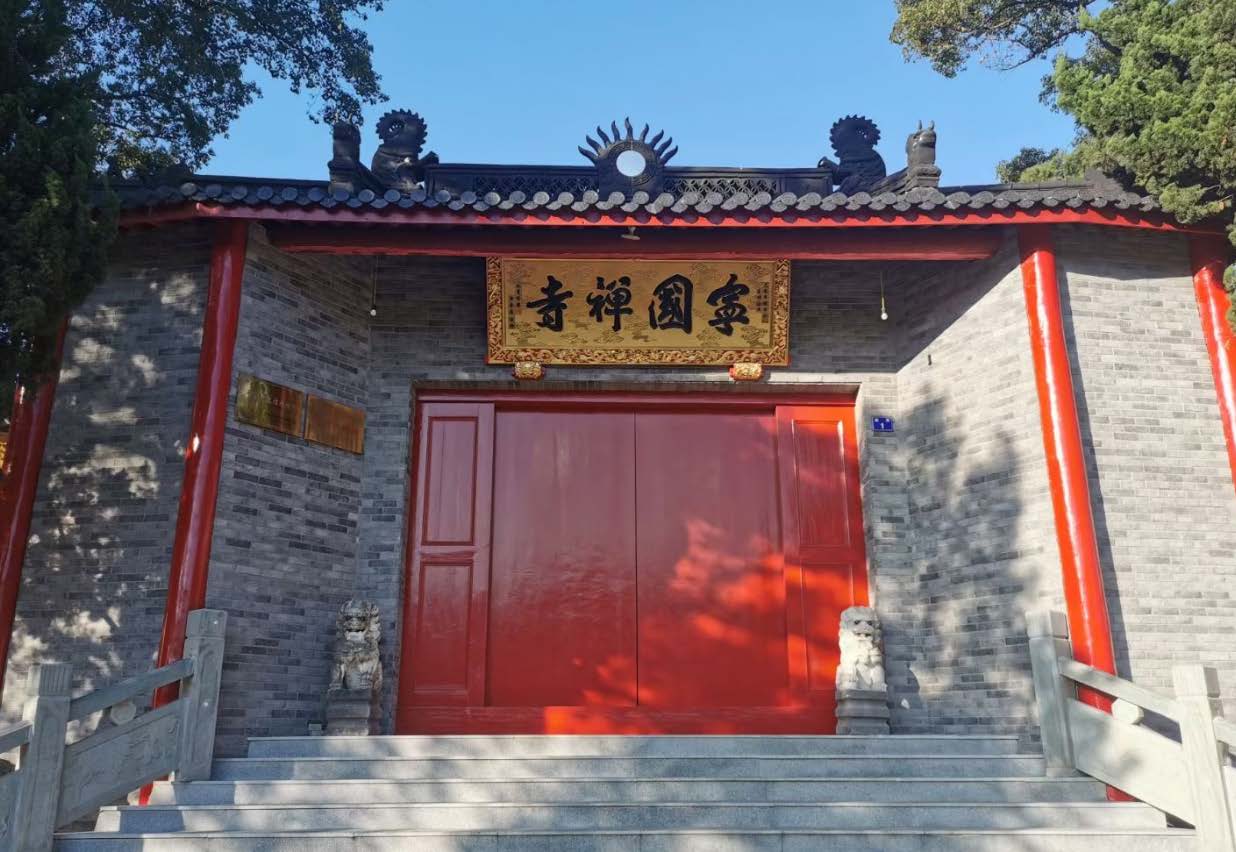
The temple
According to the temple’s own account, Ningguo Chan Temple was founded in 1640, in the last years of the Ming dynasty. Its monks kept the old medical learning of the time, and from 1643 they began giving herbal teas to the villagers — blends to help people stay well through the seasons. That year, 1643, is where our name comes from.
We are checking the temple’s founding date against the original Chinese records — temple annals and local gazetteers — before this page is treated as final. What is certain is the living tradition: the recipes, the herbs, and the village that kept them.

The village
Xiaomen Village sits in Baifeng, Beilun, Ningbo — a 500-year-old village with mountains on three sides and the sea on the fourth. Its tea gardens cover 330 mu of hillside, among 845 mu of farmland and more than 4,000 mu of forest. The village has been recognised nationally for rural governance, and it is home to three living traditions: the temple, the old general’s shrine, and the red memorial hall.
In August and September 2025, the temple’s abbot handed more than fifty of the old recipes to the village. They were reviewed by doctors of Chinese medicine and professors of Zhejiang Chinese Medical University, tested by an independent laboratory, and are now produced in the village.
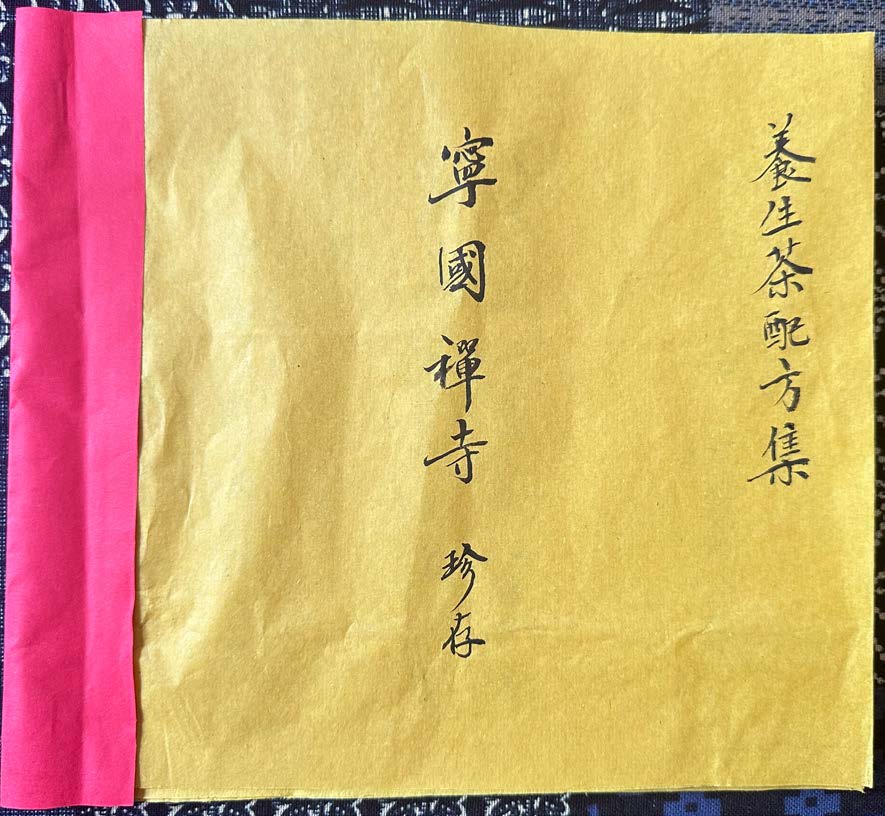
The recipes
Each blend is made from whole dried herbs — roots, seeds, flowers and fruit — mixed by hand and packed in small batches. There are no flavourings and no tea leaves in the usual sense: these are herbal infusions, in the Chinese tradition of drinking for balance through the seasons.
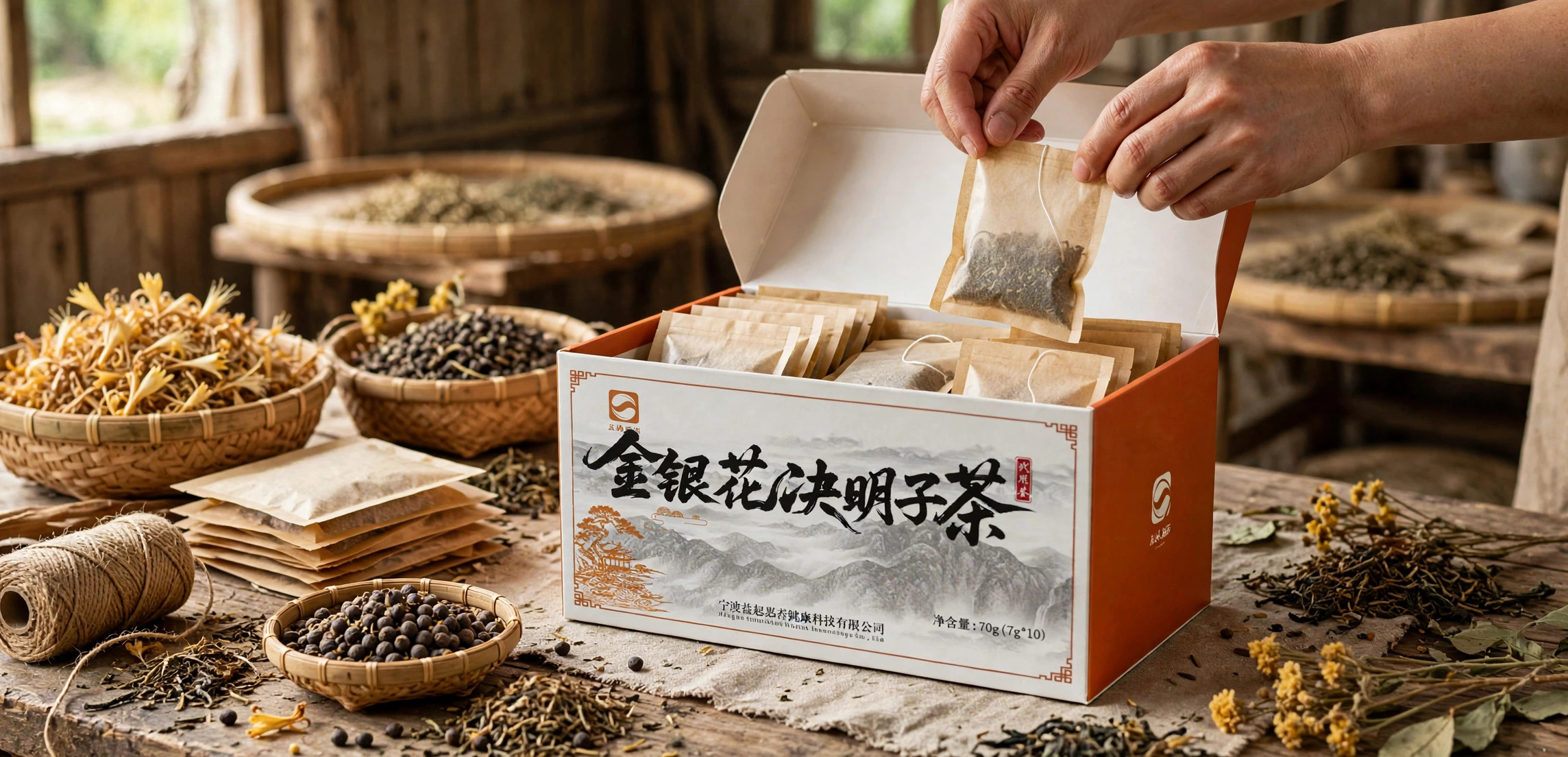
The idea is to drink with the year: twenty-four solar terms, twenty-four different teas. We begin with five. The rest will follow, one season at a time.